ZIPAIR begins first nonstop Tokyo–Orlando flights, testing Japan–Central Florida demand with four charters
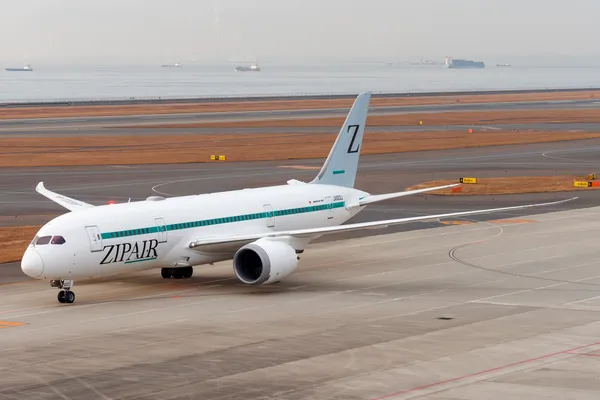
First direct passenger link between Japan and Florida
Orlando International Airport is now connected to Tokyo’s Narita International Airport through a limited series of nonstop charter flights operated by ZIPAIR Tokyo. The operation marks the first time nonstop passenger service has been scheduled between Japan and Florida, creating a direct air bridge between Central Florida and the Tokyo region during a peak late-winter travel window.
The launch is structured as a short trial rather than a full seasonal timetable. ZIPAIR’s plan calls for four round-trip flights, with departures scheduled on Feb. 23, Feb. 28, March 5 and March 10, 2026. The flights are designed for point-to-point travel, and the schedule reflects the time-zone shift: westbound segments from Japan arrive in Orlando the same afternoon, while eastbound returns from Orlando arrive in Japan the following day.
What is operating, and when
- Route: Tokyo Narita (NRT) – Orlando (MCO)
- Operating pattern: Four round-trip charter flights (late February through early March 2026)
- Typical timing: Afternoon departures on both ends; same-day arrival into Orlando, next-day arrival into Narita on the return
Aircraft and service model
ZIPAIR is using the Boeing 787-8 for the Orlando operation, consistent with its long-haul fleet. The carrier’s 787-8 configuration is built around a high-density, two-cabin layout totaling 290 seats, including a premium “full-flat” product and a larger economy cabin.
ZIPAIR operates as a low-cost carrier with an à la carte approach, in which many add-ons—such as baggage and onboard items—may be priced separately depending on the fare selection. This operating model has helped the airline expand long-haul flying while targeting travelers who prioritize nonstop access and base fare flexibility.
Why the route matters for Orlando
For the region, the Tokyo service is a test of whether nonstop demand exists at a scale that could support more frequent flying. Central Florida is a major leisure destination with a large visitor economy, while Narita serves as a global long-haul gateway for the Tokyo metropolitan area and beyond. A nonstop flight reduces travel time and removes the need for domestic connections that often add cost, complexity and missed-connection risk.
The four-flight structure reflects a market trial: a way to gather operational data and measure demand before broader commitments are made.
What comes next
Beyond the four scheduled round trips, no additional dates have been confirmed. Any expansion—whether another limited seasonal run or a transition to regularly scheduled service—would depend on multiple factors, including sustained demand, airport operational planning, and the airline’s fleet and route priorities. For now, the Tokyo–Orlando service remains a time-limited charter operation rather than a permanent addition to Orlando’s route map.