Why Orlando’s skies look smoky and hazy: prescribed burns, wildfires, dust, and weather patterns explained
What residents are seeing
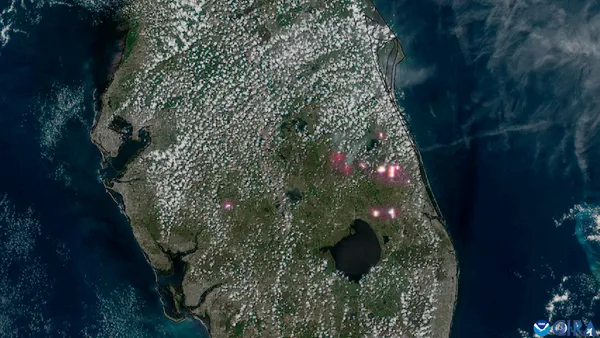
Hazy skies, a faint smell of smoke and reduced visibility across the Orlando area can result from several distinct events that sometimes overlap: smoke from prescribed burns or wildfires in Florida, long-range smoke transported from major fires outside the state, and airborne dust that scatters sunlight and dulls visibility. Local weather conditions—especially wind direction, humidity, and atmospheric stability—often determine whether these particles stay aloft, drift away quickly, or settle into a widespread haze.
Prescribed burns: common in Florida and capable of covering large areas
Planned, closely managed fires are routinely conducted on public and private lands across Florida to reduce excess vegetation that can fuel dangerous wildfires. Under the right wind conditions, smoke from a single large burn can spread far beyond the ignition site and lead to a noticeable haze in the Orlando metro area, including downtown corridors and surrounding suburbs.
Prescribed burns can produce thick smoke close to the source and a more uniform, milky haze downwind. The most visible impacts typically occur when winds steer the plume toward Central Florida and the atmosphere limits vertical mixing, allowing smoke to concentrate near the surface.
Wildfire smoke can reach Central Florida from far away
Orlando-area haze is not always tied to a nearby fire. On certain days, smoke from large wildfire complexes can be transported hundreds or even thousands of miles. In past events, smoke from major fires in Canada moved south over the eastern United States and reached Florida, triggering hazy skies and degraded air quality across portions of Central Florida.
When long-range smoke is the driver, residents may see a light brown or gray tint in the sky even without a visible local plume. Air-quality impacts can vary by neighborhood depending on shifting winds and the altitude of the smoke layer.
Saharan dust: a different kind of haze with different clues
Another recurring factor is Saharan dust, which periodically drifts across the Atlantic and reaches Florida, most often during warmer months. Dust haze tends to look more uniformly “milky” than smoke, often without a strong smoky odor. It can also reduce visibility and contribute to muted daylight and more vivid sunsets because fine particles scatter sunlight.
How to assess conditions and reduce exposure
The most important difference for public health is not the sky’s appearance but the concentration of fine particles at breathing level. Residents can take practical steps when haze is present:
- Check the local Air Quality Index (AQI) and limit strenuous outdoor activity when readings are elevated.
- Keep windows closed and run air conditioning on recirculation when smoke is present.
- Use effective indoor filtration where available; sensitive groups may benefit from a dedicated “cleaner air” room.
- People with asthma, heart or lung disease, older adults, children, and pregnant people should be especially cautious during poor-air episodes.
Haze over Central Florida can look similar day to day, but the underlying causes—and the health implications—often depend on whether the particles are smoke, dust, or a combination of both.
What to watch next
Hazy conditions typically improve when winds shift, rain helps remove particles, or the atmosphere becomes more mixed. If haze persists, it can indicate continued smoke transport, ongoing prescribed burning, or prolonged dust intrusions—sometimes occurring simultaneously.