St. Cloud’s rapid expansion reshapes Osceola County as growth pressures housing, roads, and city services
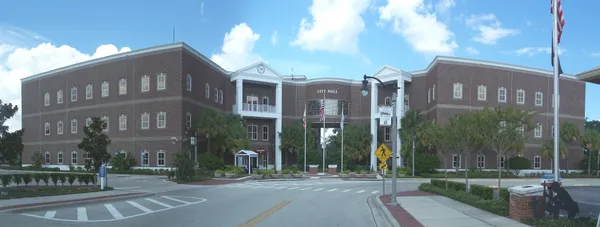
A small city’s big trajectory
St. Cloud, on the northern edge of Osceola County, has been among Central Florida’s most closely watched growth markets as population gains and new construction accelerate across the county’s east–west corridor. The city’s population rose from 35,183 in 2010 to 58,964 in 2020, a shift that has pushed local government to revisit long-range land use and capital planning as new neighborhoods, commercial sites, and employment centers reshape travel patterns and service demand.
Growth drivers: location, land, and regional migration
St. Cloud’s expansion is occurring within a broader regional surge that has elevated Osceola County’s profile as one of Florida’s fastest-growing counties in recent years. Countywide growth has been tied to in-migration—both domestic and international—alongside sustained demand for housing within commuting distance of major employment hubs in the Orlando area. In Osceola County, recent annual population increases have also coincided with large residential development pipelines, intensifying needs for schools, road capacity, utilities, and public safety staffing.
Planning for 2050: what local projections indicate
City planning discussions now include updated projections that place St. Cloud on a path toward a substantially larger footprint. As part of ongoing comprehensive planning work, local officials have cited expectations that St. Cloud could reach roughly 108,000 residents by 2050 within current city limits if recent growth patterns persist. At the county level, long-range forecasts used in public planning have also described Osceola County surpassing 700,000 residents by 2050, underscoring why transportation and utility investments are being evaluated on a multi-decade horizon.
Infrastructure and mobility: the immediate constraint
Transportation remains the most visible pressure point. More residents translate into heavier peak-hour traffic on primary arterials linking St. Cloud, Kissimmee, and job centers in Orange County. To manage growth-related travel demand, Osceola County has advanced mobility-fee policies intended to align new development with funding for roadway and connectivity improvements. Parallel planning by regional transportation partners has also focused on long-term corridor capacity and network links that would better distribute traffic as development spreads east and south.
Economic development and the jobs question
As residential growth continues, the economic balance between where people live and where they work remains central to the city’s trajectory. County economic development initiatives have emphasized higher-wage sectors—particularly advanced manufacturing and technology—anchored by NeoCity, a major employment campus in Osceola County. While job creation can broaden the tax base and reduce commuter pressure over time, it can also increase daytime population and infrastructure demand near employment districts.
Population growth increases demand for housing supply, including entry-level homes and rentals.
Road capacity, intersection performance, and transit options become critical quality-of-life variables.
Utility planning—substations, water and wastewater capacity—must expand ahead of new neighborhoods.
St. Cloud’s growth has moved from a future expectation to a current planning reality, with local and county agencies recalibrating land use, infrastructure, and service delivery timelines.
For St. Cloud and Osceola County, the defining policy challenge is sequencing: aligning housing delivery, job creation, and infrastructure capacity so that the pace of development does not outstrip the systems residents rely on day to day.