Orlando considers $160 million downtown bond financing tied to CRA expansion and major public-space projects
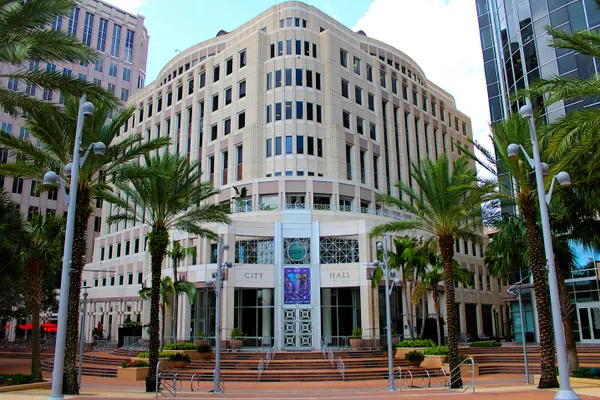
A financing package under review
Orlando city leaders are weighing authorization of up to $160 million in Community Redevelopment Agency (CRA) tax-increment revenue bonds aimed at accelerating a slate of downtown capital projects. The proposal is part of a broader effort to advance work identified under the city’s Downtown Orlando Action Plan, which focuses on mobility, public-space upgrades and downtown connectivity.
The bond authorization is being discussed alongside a proposed amendment that would expand the Downtown CRA boundary. The expansion under consideration would add 47 acres around Camping World Stadium, bringing additional territory into the redevelopment area where incremental property tax growth can be dedicated to eligible improvements.
What the money would support
Projects discussed in connection with the downtown plan include roadway changes, new parks and gateway signage near Lake Eola, as well as a marquee open-space project known as The Canopy, planned beneath Interstate 4. City staff have indicated construction for The Canopy is expected to begin in summer 2026, marking a key near-term milestone for the downtown initiative.
Separately, the city has also outlined a multi-year pipeline of downtown mobility and public-realm projects spanning late 2025 through late 2027, including street conversions, sidewalk work and access improvements. While individual projects may be funded through multiple sources, the contemplated bond financing is intended to provide a large, flexible pool for major capital needs tied to the CRA framework.
How CRA bond financing works
CRA tax-increment financing is structured around future growth in property tax revenues within the redevelopment area. As property values rise, the incremental increase can be directed to redevelopment purposes rather than general uses, within limits set by law and adopted plans. Bonds backed by those future increments allow governments to bring forward capital dollars for construction, with debt service paid over time from the increment.
In practical terms, authorizing bonds does not automatically finalize project lists or construction contracts. It does, however, establish a financing capacity that can be deployed as project design, permitting, and procurement advance.
Key questions likely to shape the decision
Boundary expansion: Whether adding acreage near Camping World Stadium aligns with redevelopment goals and creates measurable benefits such as safer routes, improved sidewalks and better connections to downtown.
Project prioritization: Which projects are advanced first, and how investments are sequenced to minimize disruption while delivering visible improvements.
Debt capacity and timing: How projected tax-increment growth supports borrowing levels, and how interest-rate conditions affect total repayment costs.
Community impact: How proposed public-space and transportation changes affect residents, small businesses, and major event operations.
City discussions have centered on using the financing to move forward with downtown road projects, parks and related improvements, with The Canopy among the projects expected to begin construction in summer 2026.
What happens next
City leaders are scheduled to review the CRA boundary amendment and the bond authorization in public meetings. If approved, subsequent steps would include finalizing project scopes, confirming eligible uses under the CRA plan, and proceeding through contracting and construction timelines for individual downtown improvements.
The combined actions—expanding the CRA footprint and authorizing sizable bond financing—would represent a major structural move in how Orlando funds downtown redevelopment, shifting more near-term capital investment onto revenue expected from future growth within the redevelopment area.