Orlando City Attorney Says Federal Authority Limits Local Options on Proposed ICE Detention Facility
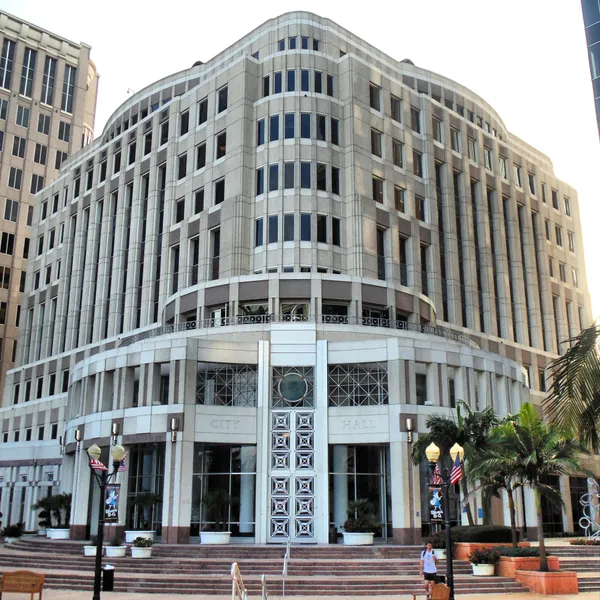
Legal opinion frames city authority as limited under federal supremacy
Orlando’s top municipal lawyer has advised city leaders that Orlando cannot legally prevent the federal government from opening an Immigration and Customs Enforcement detention facility within city limits, if federal officials decide to proceed.
The legal position was delivered in a written opinion from City Attorney Mayanne Downs to Mayor Buddy Dyer and released publicly on Monday, January 26, 2026. The request for analysis followed growing public concern after federal officials toured a large industrial warehouse site in East Orange County that is located within the City of Orlando.
Site under discussion: a large logistics warehouse near major transportation corridors
The property that drew attention is a warehouse at 8660 Transport Drive, marketed as the Beachline Logistics Center. Commercial listings describe the building as a newly built logistics facility with roughly 440,000 square feet, extensive loading-dock capacity, and proximity to State Road 528, State Road 417, and Orlando International Airport.
Local officials and community advocates have raised questions about whether such a site is designed or suitable for detention operations, including infrastructure needs, impacts on surrounding businesses, and compatibility with the area’s industrial land-use planning.
What the city attorney’s office says the law allows
The city attorney’s opinion cites the U.S. Constitution’s Supremacy Clause, which establishes that federal law prevails over conflicting state or local rules. The letter states that federal agencies carrying out federal mandates are generally immune from local regulation that would interfere with those duties, including attempts to use zoning or local moratoriums to block federal operations.
The opinion points to federal court precedent in Florida involving efforts by a municipality to apply local permitting and zoning controls to a federal project, concluding the city is bound to follow well-established principles of federal preemption.
Political and policy debate continues even as legal options narrow
Mayor Dyer said the city had not received direct communication from ICE confirming plans for a detention center at the site, but sought the legal review in response to public concern. He encouraged residents who want changes to immigration detention policy to engage federal lawmakers, emphasizing Congress’ oversight and funding authority.
At the county level, some officials have explored potential legislative responses, including temporary restrictions aimed at stopping new detention-related uses. Any local action, however, could face additional constraints under Florida law that limits the ability of local governments to adopt certain development moratoriums and related land-use restrictions through October 1, 2027.
- Key unresolved issue: whether federal officials will formally select the Orlando warehouse site.
- Key legal point: local regulation generally cannot obstruct federal immigration enforcement operations.
- Key governance reality: meaningful policy changes are most likely to come through federal action.
City leaders can debate local impacts and preparedness, but the legal framework described by the city attorney places primary decision-making authority at the federal level.