Brush fires in Orlando and Daytona Beach test Central Florida as drought fuels spread risk
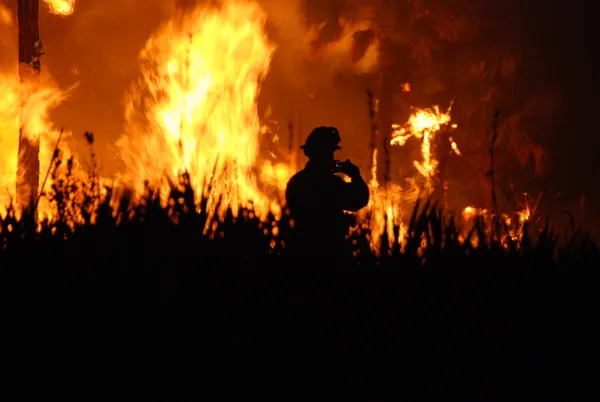
Fires reported Monday in MetroWest and near LPGA Boulevard
Fire crews responded Monday, Feb. 23, 2026, to separate brush fires in the Orlando area and in Daytona Beach, as dry vegetation and drought conditions continue to elevate wildfire risk across Florida. Officials in both locations emphasized that fast-moving flames and shifting winds can quickly change fire behavior, even when structures are not immediately threatened.
In Orlando’s MetroWest area, a brush fire was reported in a wooded area near Arnold Palmer Drive and Kirkman Road shortly after 6 a.m. Firefighters brought the incident under control later in the day. The burned area was estimated at roughly eight acres, and officials reported no injuries, no evacuations, and no damage to buildings or homes.
In Daytona Beach, fire crews worked a brush fire west of the Mosaic subdivision near the LPGA Boulevard corridor. The fire was estimated at about 20 to 25 acres and was reported about 25% contained by late morning. Authorities stated that no buildings were at risk at that time. Officials also announced restrictions on outdoor burning in response to drought-driven fire danger.
Drought indicators and weather patterns are converging on higher fire danger
Florida has entered a period in which drought conditions are widespread, with large parts of the state categorized in severe to extreme drought. The situation is significant for fire managers because the same lack of moisture that affects soils and vegetation also increases the odds that a small ignition—whether accidental or natural—can spread quickly through dry fuels.
Local fire agencies and county governments typically rely on drought and fire-danger indices to guide restrictions, staffing, and readiness. One commonly used measure in Florida is the Keetch-Byram Drought Index, which estimates dryness in soil and organic layers that can feed wildfire growth. When these indicators rise, agencies often move to limit activities most likely to spark an ignition.
What burn restrictions generally mean for residents
- Outdoor burning may be prohibited unless explicitly authorized under state or local rules.
- Yard-debris burning, bonfires, and other open flames are often restricted first due to high ignition potential.
- Fire officials typically advise extra caution with any heat source outdoors, including equipment that can throw sparks.
Officials across Central Florida have repeatedly warned that dry brush can ignite easily and that wind can carry embers beyond the visible fire line.
Operational impacts: containment can remain uneven across incidents
Even when fires are kept away from structures, containment can vary significantly based on terrain, wind shifts, and fuel conditions. Monday’s incidents illustrated that reality: Orlando crews reported significant progress as the day went on, while the Daytona Beach fire remained in active suppression with partial containment reported during the morning. Fire agencies continued to urge residents to avoid outdoor burning and to monitor local restrictions as drought conditions persist.